


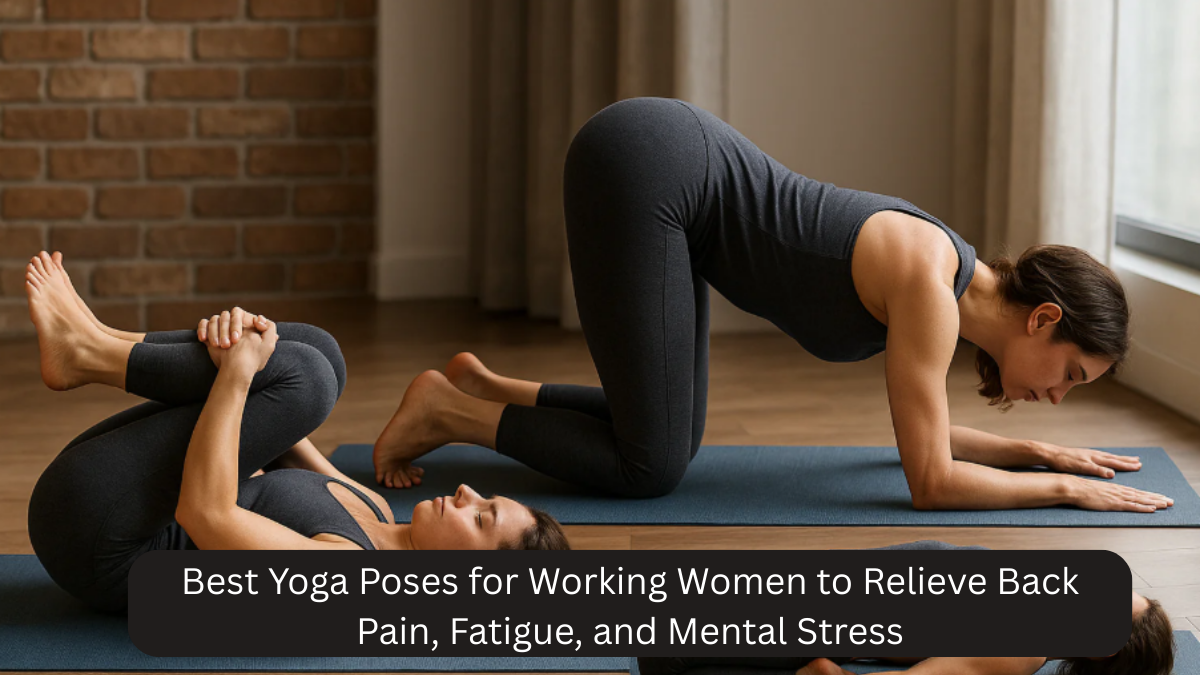
In today’s fast-paced world, working women often juggle office responsibilities, household chores, and social commitments, leaving little time to care for their physical and mental well-being. Long hours at a desk, prolonged screen time, and high stress levels can lead to back pain, fatigue, tension headaches, and mental burnout.
Yoga is an ideal solution for busy working women because it combines gentle movement, stretching, breathing, and mindfulness. Even a short daily yoga practice can help relieve physical discomfort, reduce fatigue, and improve mental clarity. Yoga promotes flexibility, strength, blood circulation, and relaxation, making it a holistic tool to restore balance and energy.

This article explores the best yoga poses for working women, their benefits, step-by-step instructions, and tips to practice safely at home or office.
Why Yoga Is Essential for Working Women
Working women face a unique combination of physical and mental challenges:
- Sedentary lifestyle: Sitting for long hours compresses the spine, tightens hip flexors, and weakens back muscles.
- Stress and anxiety: Deadlines, multitasking, and social pressures increase cortisol levels, affecting mood and energy.
- Fatigue and low energy: Lack of movement reduces blood circulation and oxygen flow, leaving the body lethargic.
- Posture-related issues: Hunching over laptops or mobile devices strains the neck, shoulders, and lower back.
Yoga addresses these challenges by:
- Stretching and strengthening muscles to relieve tension and improve posture.
- Increasing blood flow to reduce fatigue and energize the body.
- Activating the parasympathetic nervous system to lower stress and anxiety.
- Improving mental clarity, focus, and emotional resilience.

By dedicating even 15–20 minutes a day, working women can feel lighter, more flexible, and mentally rejuvenated.
10 Best Yoga Poses for Working Women
1. Cat-Cow Pose (Marjaryasana-Bitilasana)
Benefits: Relieves back pain, stretches spine, opens chest, improves posture, and stimulates circulation.
How to Do:
- Start on all fours with wrists under shoulders and knees under hips.
- Inhale, arch your back, lifting your tailbone and chest (Cow Pose).
- Exhale, round your spine, tucking your chin to your chest (Cat Pose).
- Repeat 10–15 cycles, coordinating movement with breath.
Tips: Move slowly and focus on spinal mobility. This pose is ideal for relieving office-induced back stiffness.
2. Child’s Pose (Balasana)
Benefits: Calms the mind, stretches lower back and hips, relieves fatigue.
How to Do:
- Kneel on the floor, touch big toes together, and sit on heels.
- Fold forward, extending arms in front or alongside your body.
- Rest your forehead on the floor and breathe deeply.
- Hold for 1–3 minutes.
Tips: Use a cushion under your forehead for comfort. Child’s Pose is perfect for midday stress relief.
3. Downward-Facing Dog (Adho Mukha Svanasana)
Benefits: Stretches spine, shoulders, hamstrings, and calves; relieves fatigue; improves circulation.
How to Do:
- Start on hands and knees, lift hips toward the ceiling forming an inverted V.
- Press heels toward the floor and lengthen spine.
- Relax head between arms and breathe deeply.
- Hold for 30–60 seconds.
Tips: Bend knees slightly if hamstrings are tight. This pose energizes the body while decompressing the spine.
4. Cobra Pose (Bhujangasana)
Benefits: Strengthens lower back, opens chest, relieves tension in shoulders and neck.
How to Do:
- Lie on your stomach, legs extended, hands under shoulders.
- Inhale, lift chest off the floor using back muscles, keeping elbows slightly bent.
- Keep shoulders away from ears and gaze forward.
- Hold 15–30 seconds, then release.
Tips: Avoid pressing too forcefully with hands; focus on engaging back muscles rather than straining the spine.
5. Bridge Pose (Setu Bandhasana)
Benefits: Strengthens glutes, hamstrings, and lower back; opens chest and hip flexors; reduces fatigue.
How to Do:
- Lie on your back with knees bent and feet hip-width apart.
- Press feet into the floor, lift hips toward the ceiling.
- Interlace hands under your back for support.
- Hold for 30–60 seconds, then slowly lower.
Tips: Engage glutes and thighs for maximum benefit. Bridge Pose counteracts prolonged sitting and tight hip flexors.
6. Standing Forward Bend (Uttanasana)
Benefits: Stretches hamstrings and spine, relieves lower back tension, reduces mental stress.
How to Do:
- Stand with feet hip-width apart.
- Exhale, fold forward from the hips, letting the head hang.
- Slightly bend knees if necessary.
- Hold for 30–60 seconds while breathing deeply.
Tips: Keep spine long before folding fully. Forward bends calm the nervous system while releasing fatigue.
7. Seated Spinal Twist (Ardha Matsyendrasana)
Benefits: Improves spinal flexibility, relieves lower back tension, stimulates digestion.
How to Do:
- Sit with legs extended. Bend the right knee, placing the foot outside the left thigh.
- Place the right hand behind you for support and left elbow outside the right knee.
- Inhale, lengthen spine; exhale, twist gently.
- Hold 20–30 seconds, then switch sides.
Tips: Twist from the spine, not the shoulders. This pose releases built-up tension from prolonged sitting.
8. Legs-Up-the-Wall Pose (Viparita Karani)
Benefits: Relieves fatigue, improves circulation, reduces swelling in legs, calms the mind.
How to Do:
- Sit sideways near a wall.
- Lie back and swing legs up the wall.
- Keep arms relaxed by your sides.
- Hold 2–5 minutes, breathing deeply.
Tips: Use a folded blanket under hips for support. Legs-Up-the-Wall is perfect for end-of-day relaxation.
9. Eagle Arms Pose (Garudasana Arms) – Seated Version
Benefits: Relieves tension in shoulders and upper back, reduces stress, improves posture.
How to Do:
- Sit or stand with spine straight.
- Cross right arm under left, bend elbows, and wrap forearms.
- Lift elbows slightly and press palms together.
- Hold 20–30 seconds, then switch sides.
Tips: Focus on squeezing shoulder blades gently. This pose relieves office-related upper back and neck tension.
10. Corpse Pose (Savasana)
Benefits: Deep relaxation, relieves mental stress, restores energy, calms the nervous system.
How to Do:
- Lie on your back with legs slightly apart and arms by your sides, palms facing up.
- Close your eyes and focus on natural breathing.
- Hold for 5–10 minutes.
Tips: Place a cushion under knees or head if needed. Savasana is essential to consolidate the benefits of your yoga practice.
Tips for Practicing Yoga as a Working Woman
- Short Daily Sessions: Even 15–20 minutes a day is effective if consistent.
- Practice at the Right Time: Early morning or after work helps relieve stress and fatigue.
- Focus on Breath: Coordinating breath with movement enhances relaxation and oxygen flow.
- Use Props: Cushions, blocks, or straps provide support for tight muscles.
- Listen to Your Body: Avoid pushing into pain; gentle stretching is more effective than overstretching.
- Incorporate Mindfulness: Yoga is not just physical; focus on mental relaxation and presence.
How Long Before You Feel Relief?
- Immediate: Cat-Cow, Forward Bends, and Legs-Up-the-Wall can reduce tension and stiffness in 1–2 sessions.
- 1–2 weeks: Regular practice alleviates mild back pain and reduces mental stress.
- 4–6 weeks: Noticeable improvement in flexibility, posture, energy levels, and reduced fatigue.
Consistency and mindful practice are key to long-term benefits.
Frequently Asked Questions (FAQ)
Q1: Can yoga completely relieve back pain from sitting all day?
Yes, yoga strengthens back and core muscles, stretches tight areas, and improves posture, significantly reducing back pain.
Q2: How often should I practice?
15–30 minutes daily is ideal. Even 3–4 short sessions a week can provide relief.
Q3: Can beginners do these poses?
Absolutely. All poses can be modified with cushions, straps, or wall support.
Q4: Do I need a yoga mat?
A yoga mat provides comfort and grip, but a carpet or soft floor is sufficient for most poses.
Q5: Will yoga reduce work-related stress?
Yes, combining physical movement with mindful breathing calms the nervous system and reduces cortisol levels, lowering stress.
Conclusion
Yoga is an accessible, effective, and holistic solution for working women experiencing back pain, fatigue, and mental stress. The 10 poses—Cat-Cow, Child’s Pose, Downward Dog, Cobra, Bridge, Forward Bend, Seated Twist, Legs-Up-the-Wall, Eagle Arms, and Savasana—target key areas affected by prolonged sitting and stress, promoting flexibility, strength, relaxation, and energy restoration.
By practicing even 15–20 minutes daily, working women can experience improved posture, reduced pain, increased energy, and better mental clarity, empowering them to handle the demands of work and life with greater ease.
Commit to a consistent yoga routine and give your body and mind the care and balance it deserves.